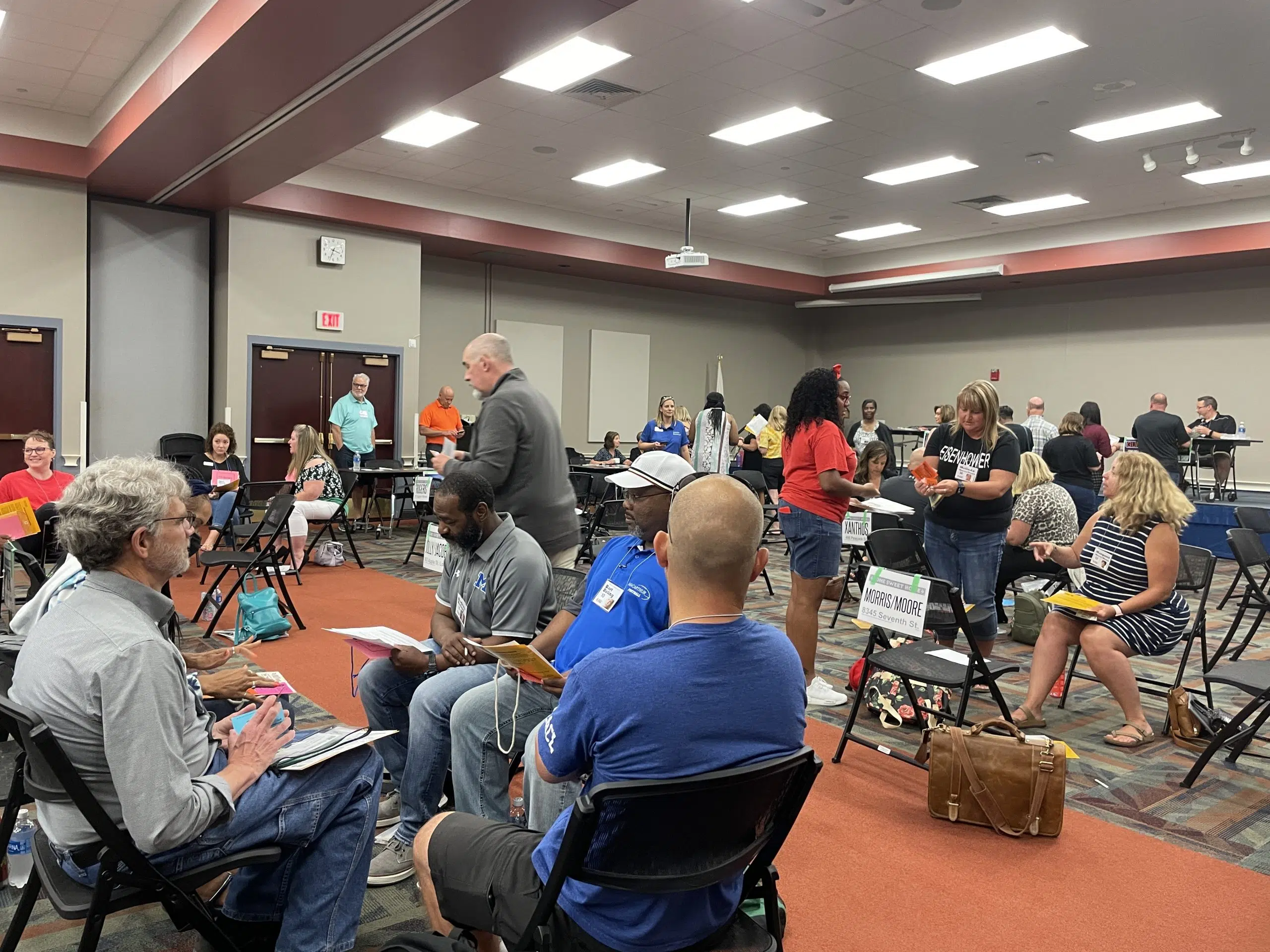
June 14, 2022- The Macon-Piatt Regional Office of Education partnered with the University of Illinois Extension to conduct a poverty simulator experience. The event was held at Richland Community College in the Shilling Salons, from 9:00 a.m. to 12 p.m.
Community members and educators participated in the simulator to give them a glimpse of what some of their peers and students living in poverty, endure, on a daily basis.
Each of the participants were put into groups representing families, assigned roles, and given scenarios. The scenarios were all developed from real life family situations. They could include having young children, being a single parent, dealing with disabilities, or having health issues.
Then, the participants went through a one-hour session, composed of 15 minute segments, which represented a month of life in poverty. Fifteen minutes represented one week. The goal was to survive. Eat, stay housed, stay healthy and keep your family in tact. Some participants chose to work; some were forced to stay home and look after their children. Some were in school if they were children, and some resorted to crime such as stealing or selling drugs.
During the session, participants would go to various stations positioned in the area that represented services and resources.
“If you go throughout the perimeter, we have healthcare, social services, banking, pay day loans, cash advance, medical, homeless, school set up, juvenile detention center, medical care,” Jill Reedy, assistant Regional superintendent at Macon-Piatt ROE said. “So we have all of those services they might access, but they are given scenarios and have to make sure that they find food, shelter, pay their rent, and take care of their families.”
While making their way from station to station, some families encountered facilitators handing cards to them that represented unfortunate situations and obstacles such as their car breaking down, or issues with utilities. For some families, they were finally back on track, and these bad breaks set them back in a never ending cycle.
“We saw ourselves growing and getting things together,” Cordell Ingram, principal at MacArthur High School said. “The piece that was missing in this experience in the end was when the car breaks down. We are over here counting money, we finally got on our feet, and those are things that break families down. All it takes is the car to break down, for the refrigerator to go out. Then the frustration builds. We worked so hard to get to this place, and now we are back at zero.”
Once the simulation concluded, participants and facilitators gathered for discussion. The group was asked who asked their families how their day was, during the chaotic experience. Few raised their hands. Then, the question was asked based on the participants’ actual experience. Almost all raised their hands.
“That’s the difference between those living in poverty and those not, because what they are trying to do is survive,” Carl Baker, University of Illinois County Director for Effingham Fayette and Jasper counties said.” “How do I make end’s meet? Where is the next paycheck coming from? How do I feed my babies? They go home from work. They go home from school, and the support system isn’t there. It makes it rough in real life.”
Only thirty minutes into the experience, Reedy was hearing the frustration from participants, and how they did not realize how difficult living in poverty can be.
“I am hearing people say wow, I didn’t know it was this hard,” Reedy said. “This is so frustrating; everything is happening so quickly. I need the money but we are running out of time. I need to go to my job, but I don’t have transportation. I have heard them say I can see how you can get stuck in the cycle even though you want to get out, but there are so many road blocks along the way.”
Reedy is hopeful this experience will make community members and educators more empathetic, and that empathy can lead to change.
“I think they are going to develop empathy, but when they start seeing the problems they are going to develop solutions,” Reedy said.
