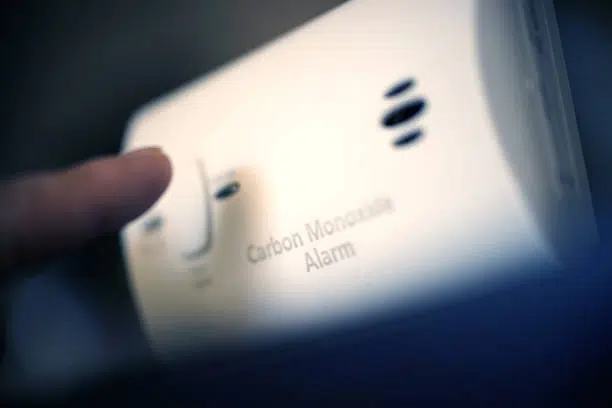
shot of a carbon monoxide
February 1, 2026 – As extreme cold and winter weather grip Illinois, fire safety officials are urging residents to take additional precautions when heating their homes to reduce the risk of fires and carbon monoxide poisoning.
According to the Illinois Office of the State Fire Marshal (OSFM), fire departments across the state responded to 9,860 carbon monoxide-related calls in 2024. Carbon monoxide (CO) is an odorless, colorless gas that can be deadly and is more likely to pose a risk during winter months when heating systems and alternative heat sources are used more frequently.
Nationally, the National Carbon Monoxide Awareness Association reports that emergency rooms see more than 100,000 visits each year due to CO exposure. More than 14,000 people are hospitalized annually, and approximately 1,200 deaths occur each year from carbon monoxide poisoning. In Illinois, hundreds of residents are treated in emergency rooms each year for CO exposure, and over the past decade, an average of 20 people per year have died from accidental carbon monoxide poisoning.
“During winter storms and blasts of frigid arctic air, we see a rise in home fires and carbon monoxide incidents due to the increased use of heating equipment, fireplaces, generators, and alternative heat sources,” said Illinois State Fire Marshal Michele Pankow. “Many of these emergencies are preventable with a few simple safety steps. Working smoke alarms and CO alarms save lives.”
Home heating equipment remains one of the leading causes of residential fires during the winter months. OSFM recommends keeping all heat sources at least three feet away from combustible materials, turning off space heaters when leaving a room or going to bed, and never using ovens, stoves, grills, or fuel-burning devices to heat homes. Officials also advise having chimneys, fireplaces, and heating systems inspected annually by qualified professionals.
Fire officials stress the importance of having working smoke alarms on every level of the home and inside sleeping areas, and testing them monthly.
Carbon monoxide safety is also a key concern during extreme cold, as homes are sealed tightly and fuel-burning appliances are used more often. OSFM recommends installing carbon monoxide alarms on every level of the home and near sleeping areas, operating generators only outdoors at least 20 feet away from buildings, and never running vehicles or fuel-powered equipment inside homes or garages.
Residents are also encouraged to prepare for winter storms by developing an emergency plan, identifying local warming centers, and checking on elderly neighbors or individuals with limited mobility.
Additional winter fire safety and carbon monoxide prevention information is available at sfm.illinois.gov or by following the Office of the State Fire Marshal on social media.
